TAPEDESK · a 4-track tape instrument No. 01 · MMXXVI · iPhone / iOS 17+

A four-track tape instrument · iPhone

TapeDesk

Not a recorder that looks like tape. The tape itself. Hit rec and the idea's already saturating. Drag the speed and the pitch bends with it. A tape that fights back.

3 tape effects · written in C++ Varispeed · the pitch bends Data Not Collected €4.99 launch → €6.99
Get it on the App Store €4.99 at launch. Built and tested on a real iPhone.

Everything it does → the manual

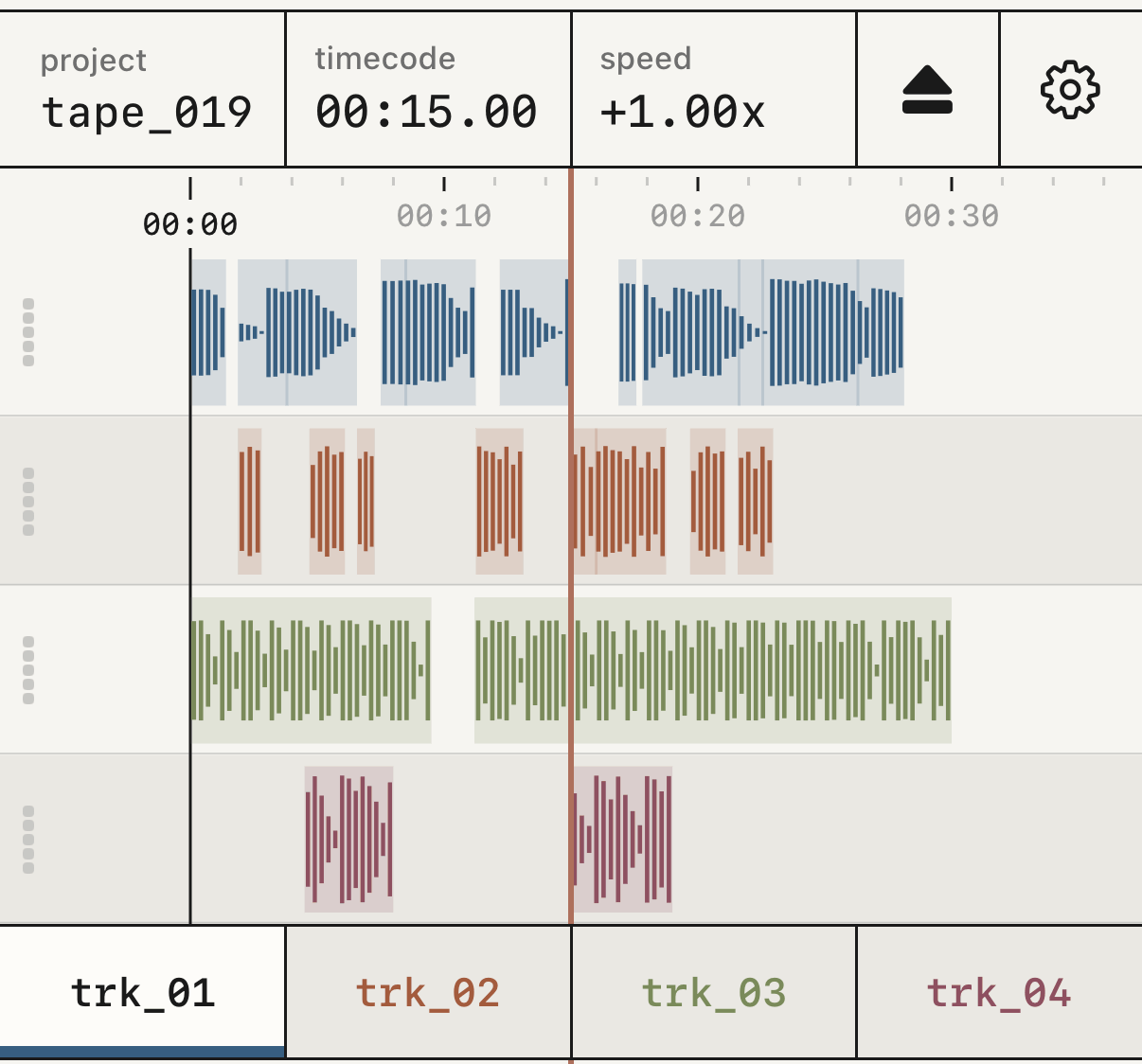
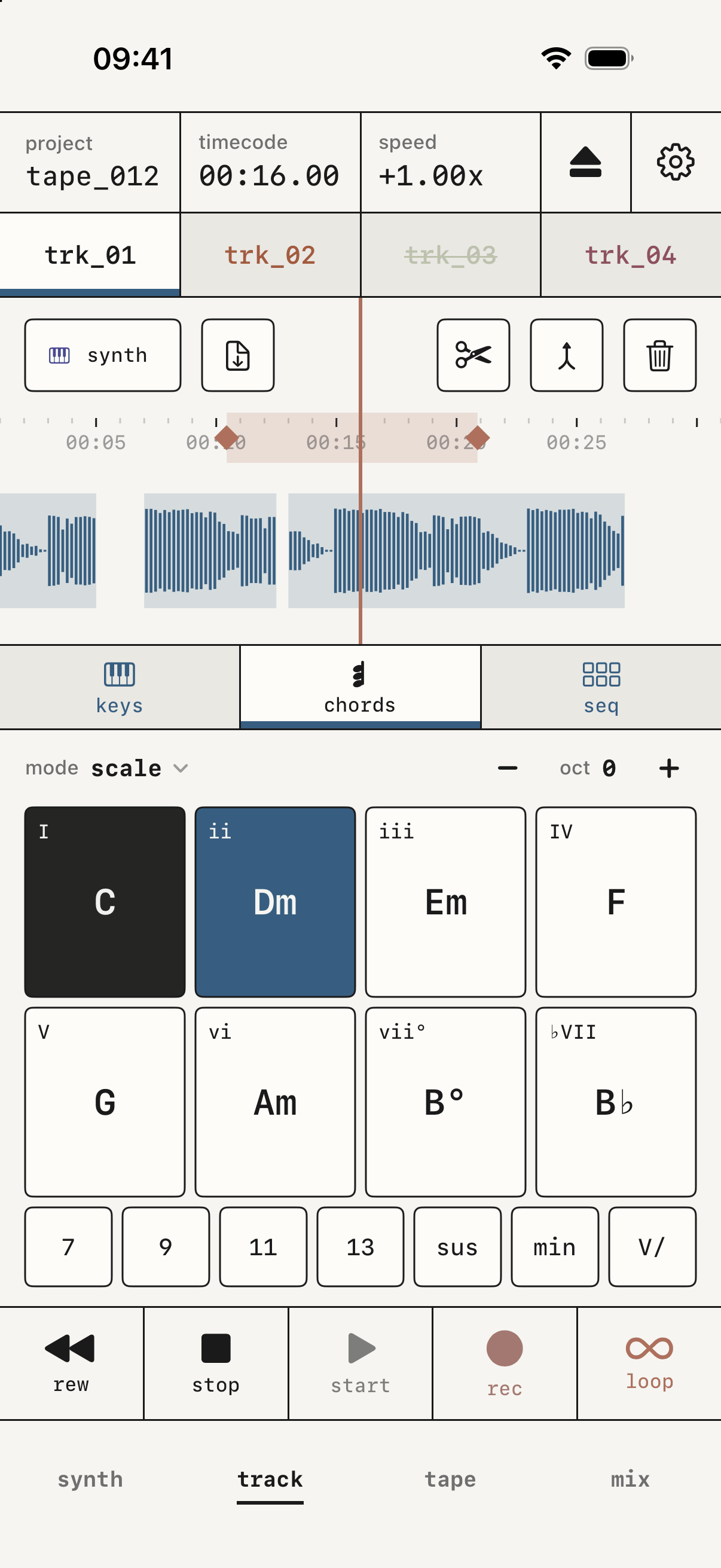
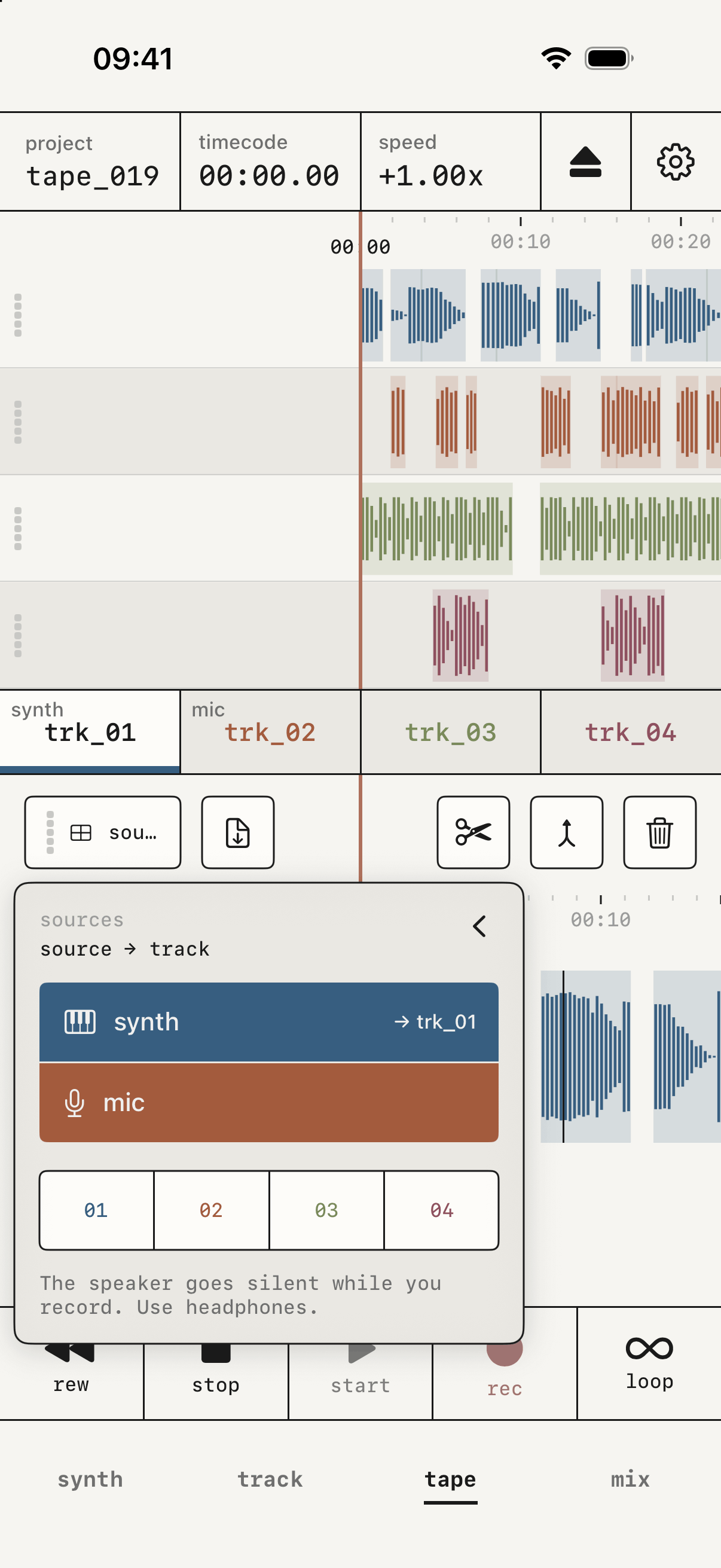
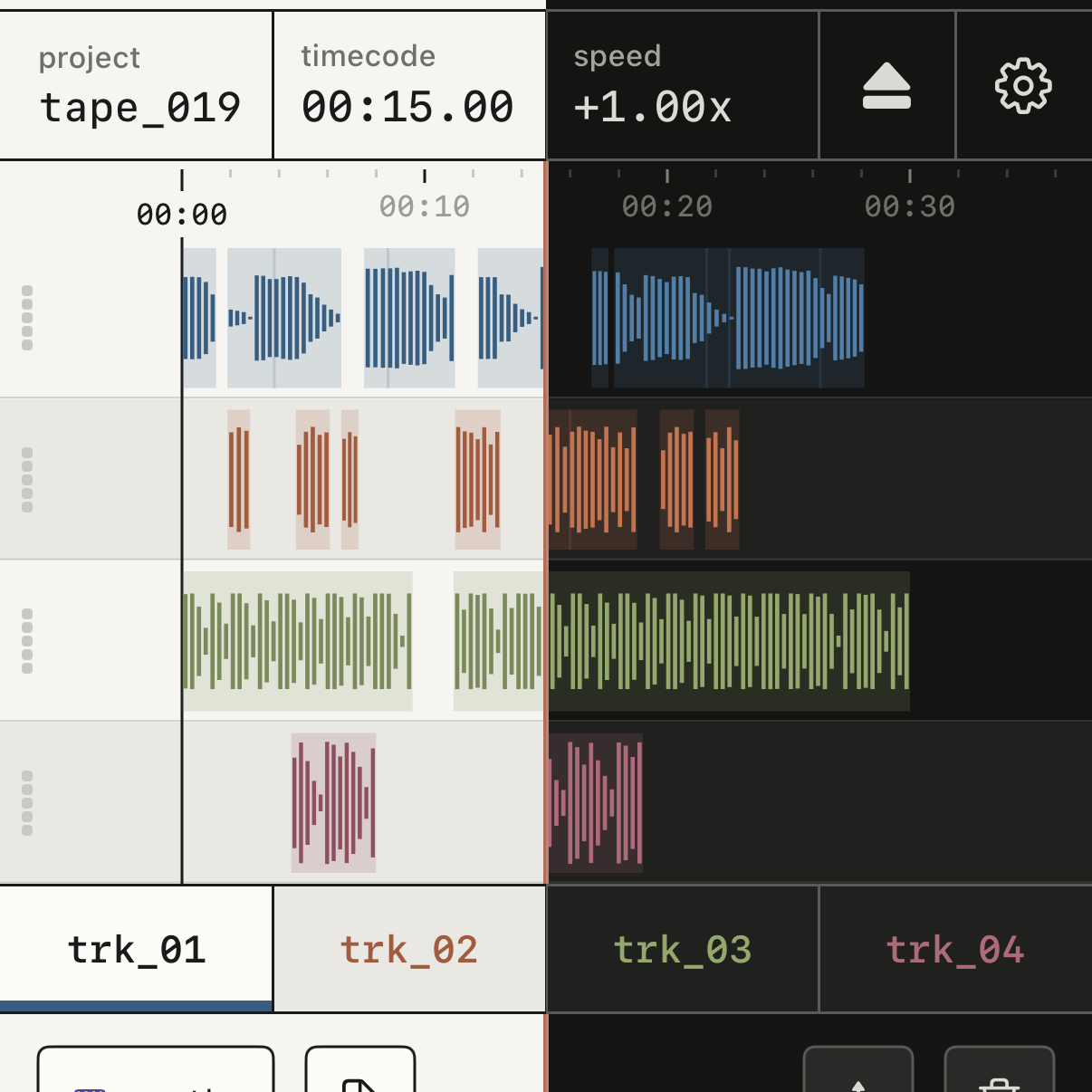
TapeDesk tape view, four tracks of recorded regions

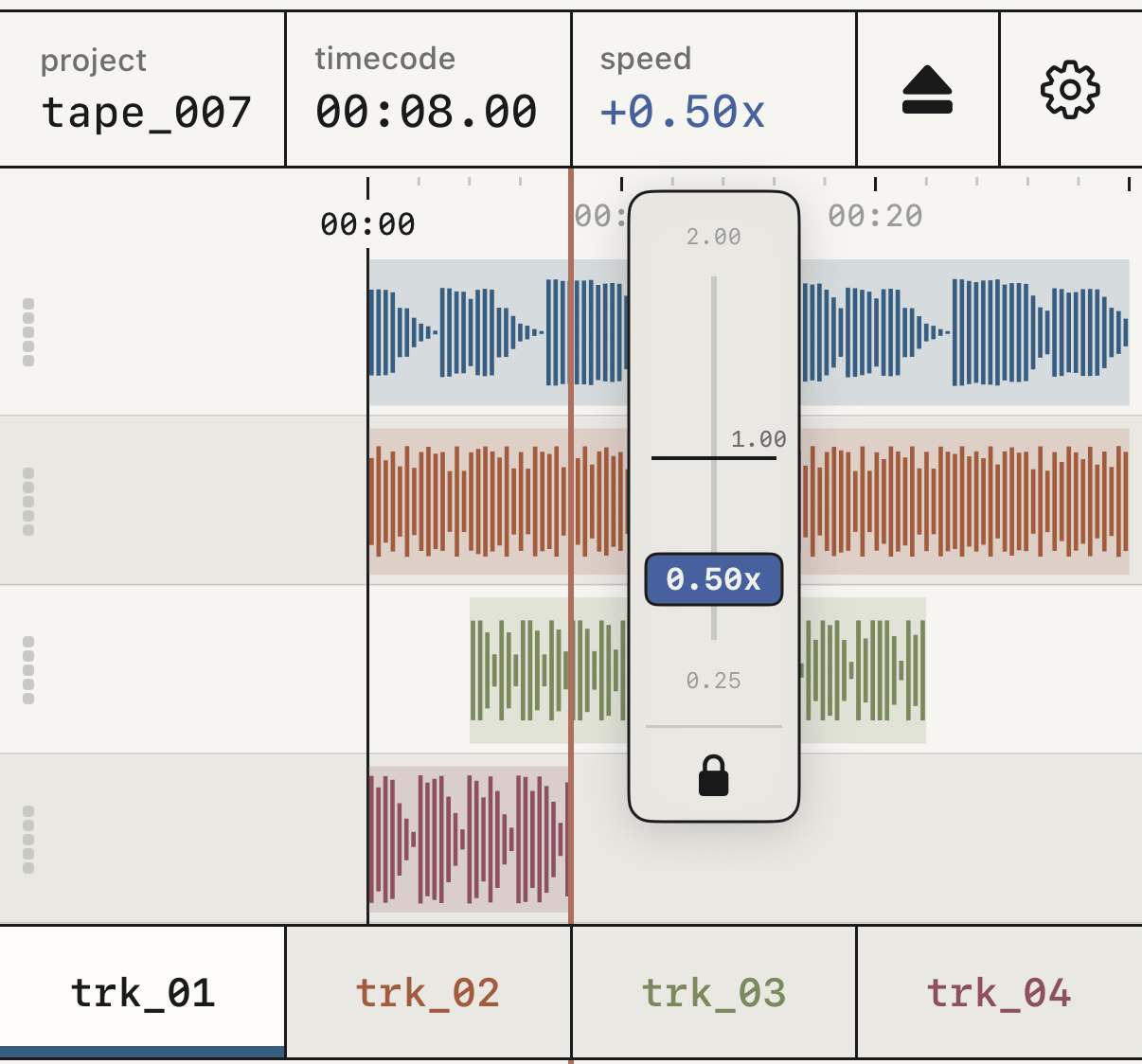
THE TAPE · four tracks, a ruler, a hard orange playhead. Drag the tape to 0.5× and the pitch sinks with it. There's no "keep pitch" switch. That was never the point.

Format
4-track tape
Platform
iOS 17+ · native
Varispeed
0.25×–2.0×
Sync
Ableton Link · MIDI
Edits
cut · join · undo
Privacy
Data Not Collected

What it is

  • + A native 4-track tape recorder for iPhone
  • + Record, overdub, live-loop and bounce across four tracks
  • + Real tape varispeed with pitch that bends, 0.25×–2×
  • + Three in-house tape effects: saturation, delay, reverb
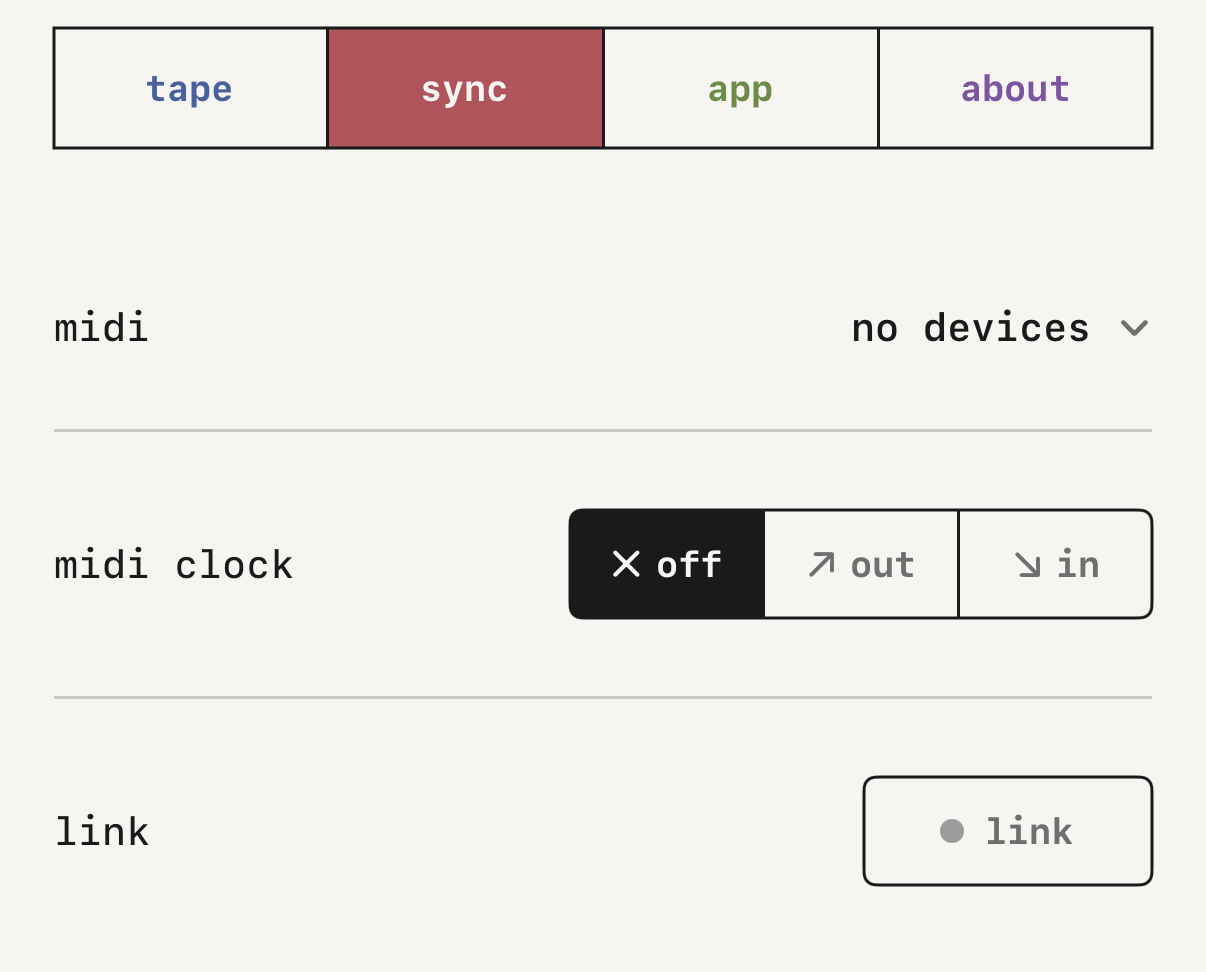
  • + Ableton Link & MIDI Clock sync
  • + Non-destructive edits: cut, join, instant undo
  • + Haptic transport, lock-screen control, 120 fps meters

What it isn't

  • × Not a DAW. No infinite tracks, no project ceremony
  • × No subscription. One price.
  • × No accounts, no sign-ups, no email wall
  • × No analytics, no tracking. Nothing leaves the device.
  • × Not free, not freemium, not free-with-a-catch. You buy it once. That's the catch.
Why it feels like one

Six reasons it plays like an instrument.

Not a spec sheet. The handful of things that make it feel like gear, not software.

01

The deck, not the DAW

Four tracks, a tape ruler, a hard playhead. Hit rec and the region's just there. No arming, no project setup, no ceremony.

02

Drag the speed, the pitch goes with it

0.25× to 2×, across the whole tape. Slow it and the voice sinks; speed it and it climbs, like the cassette decks this grew out of. There is no "keep pitch" switch. That's the point.

03

Loop on, and it's a live looper

Turn loop on, play a part, play another over it. It stacks while you listen. Hear the layers build, commit when it's right.

04

Three tape effects, in C++

Magnetic-tape saturation, a tape delay, an 8-line reverb. Three effects, not licensed plugins. They print into the take: once it's down, it's down, like a cassette. Most apps license a plugin and call it tape. I wrote these three myself, in C++.

05

It locks to the room

Ableton Link or MIDI Clock. Start your gear and TapeDesk falls into step and rides the tempo. Wireless, no cables, no setup screen.

06

€4.99 launch, then €6.99. Bought once.

No subscription, no account, no email wall. No analytics, no tracking. Your recordings never leave the phone.

Fig · the effects

This is what saturation looks like.

Most apps reach for a plugin and call it a tape sound. I drew three of my own, then wrote them in C++ inside the engine. The picture on each one isn't a label. It's the shape of what it does to your signal.

The effect picker: tapesat, delay and reverb, each a hand-drawn glyph
Pick a sound. A bar scattering into noise, a wave leaving, a room opening. Each glyph is the shape of what it does.

Open one and it's not a toggle. It's an instrument with its own face and its own four hands.

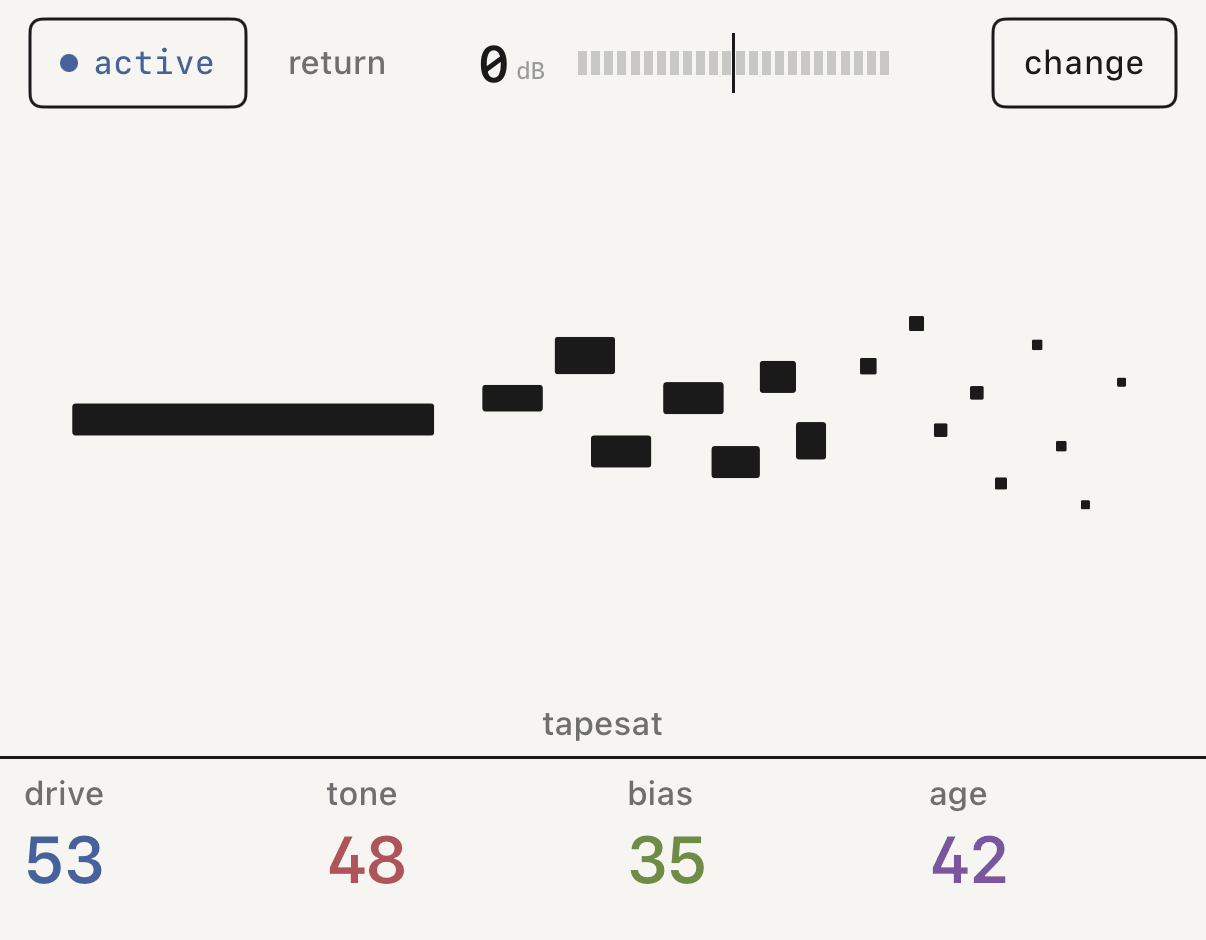
TapeSat effect panel

tapesat

drive 35 · tone 59 · bias 20 · age 25

Magnetic saturation by Jiles–Atherton hysteresis. Push age and the tape gets tired; bias is the magnetic sweet-spot you'd set by ear on a real deck.

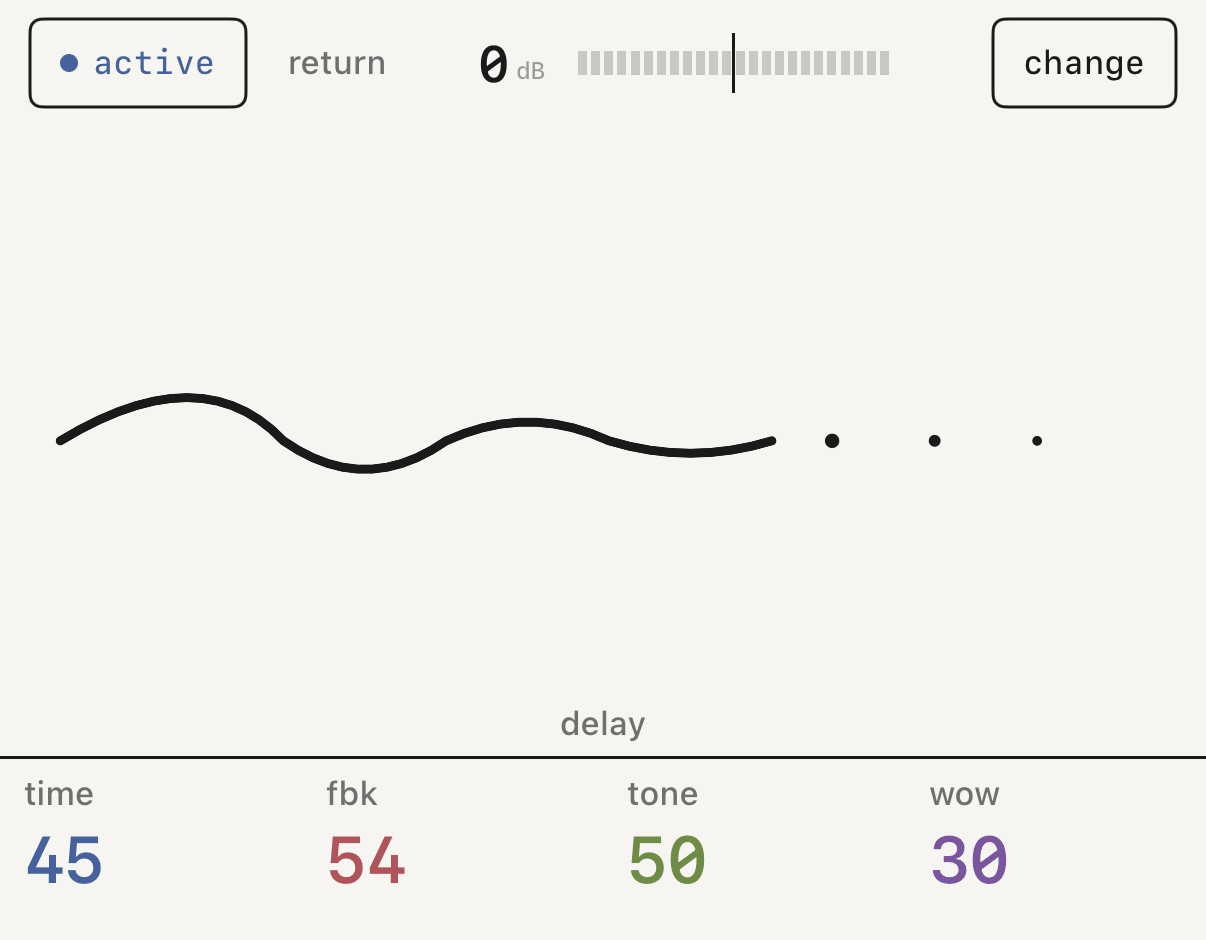
Delay effect panel, active

delay

time 99 · fbk 99 · tone 14 · wow 14

wow is the pitch waver, because real tape wavered. Crank fbk and it smears instead of repeats. Lit amber because it's live on the bus.

Reverb effect panel

reverb

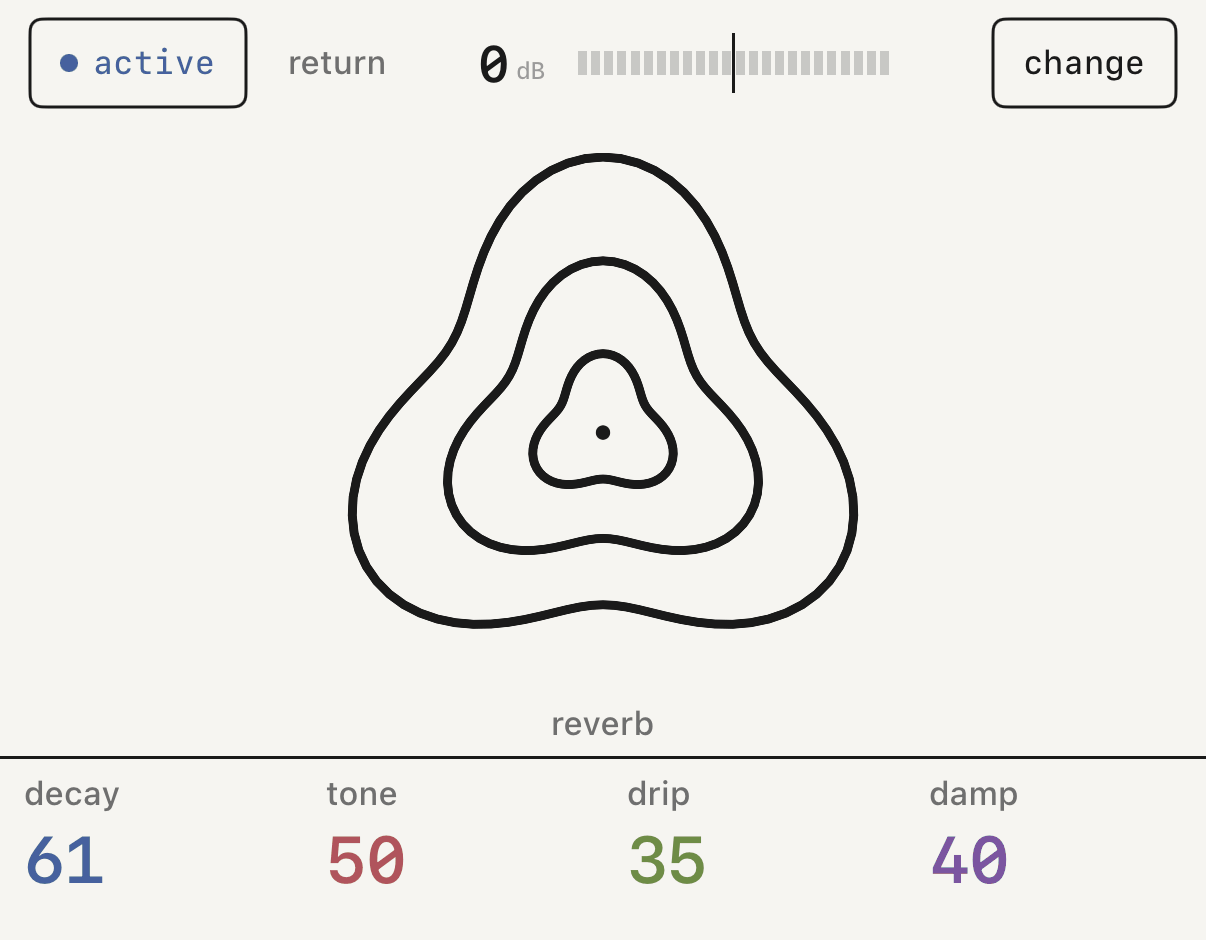
decay 59 · tone 69 · drip 35 · damp 30

An 8-line Jot FDN, a room built from feedback, not a sample of someone else's hall. drip is the wet character; damp is how fast it loses its highs.

Printed, not previewed. No latency you can feel: it runs in the same place as everything else, live. Bounce, and what you heard is on the tape. Wow, hiss, room and all. There's no render step where it comes out different. It already sounded like that.

The finish

It ends the way a deck ends.

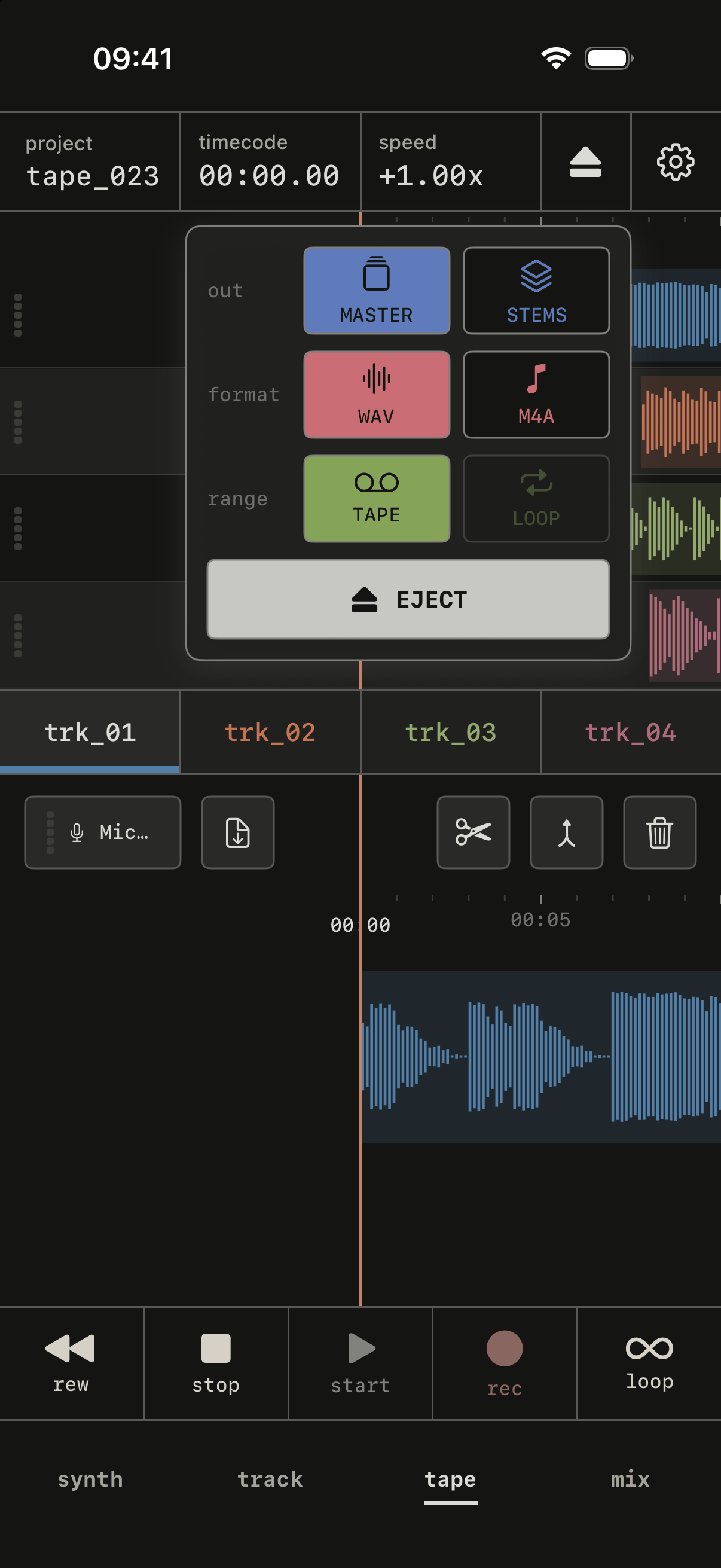
Make the thing, then press eject. The master or the stems, WAV or M4A, the whole tape or one clean loop, straight to the share sheet. No DAW, no export ceremony.

The eject panel: master or stems, WAV or M4A, whole tape or loop
master or stems · WAV or M4A · the whole tape or one loop · then eject.

The B-side

Below here is the notebook: the mark, the colours, the mixer that took four passes to get right. You met the effects upstairs; this is the physics under them. Skip it and just buy the deck. But this is where it came from.

A studio asks you to set it up. An instrument asks you to play. TapeDesk is the second kind.

01 / FEEL

Impossibly solid

Zero perceptible latency, no hitches, no dropouts. If everything else fails, the physical feel must hold. The audio thread is sacred ground.

02 / FOCUS

No menus to learn

One screen, two modes: tape and mix. Everything else is one tap away. There is no fourth menu hiding behind the third.

03 / FOREVER

Bought, not rented

One price. No accounts, no ads, no analytics, no tracking. Your recordings never leave the device.

Fig. 01

The mark is a face.

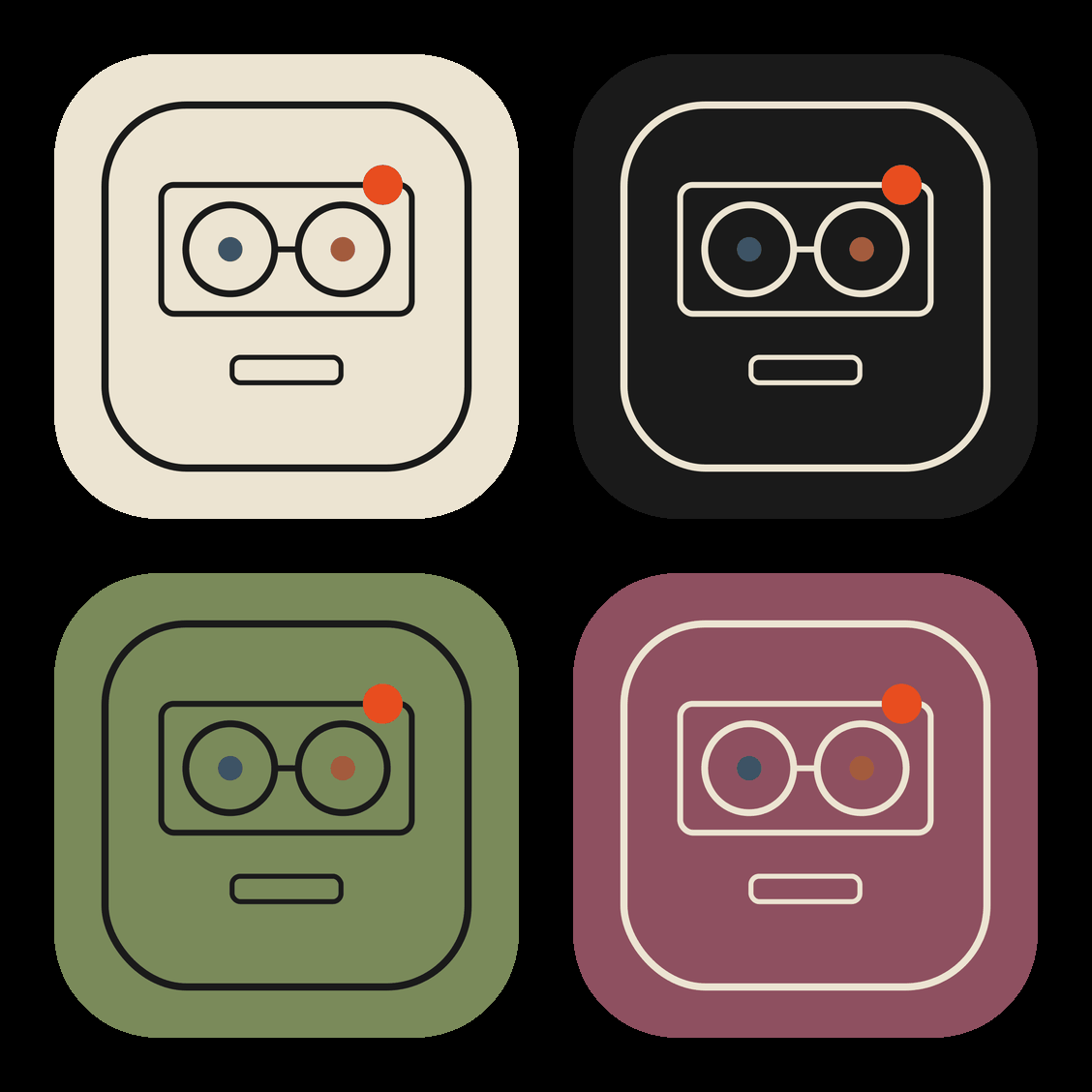
Look again: two tape reels become eyes, the record lamp becomes a warm orange freckle, the cassette window becomes a mouth. A machine that looks back. Six skins were drawn from the track palette, and the palette tells you which two had to go.

Six TapeDesk icon skins: Cream, Dark, Petrol, Terracotta, Olive, Wine
PLATE 01 · six skins, one mark. Cream · Dark · Petrol · Terracotta · Olive · Wine. Petrol and Terracotta were cut from the shipping set: against their own mid-tone the reel-eyes lost contrast and the face went blank. Four survive, the ones where the eyes still hold.
Fig. 02

A grammar of colour.

Colour here is not decoration. It is state. The four track hues belong to the tracks and nothing else. So a control needs its own language: one colour for live & movable, one for held & locked. Three pairings were rendered onto the real fader, not abstract swatches, and judged in place.

Control palette A: teal and amber
A · TEAL + AMBER
chosen · reads as state, never as a track
Control palette B: indigo and mustard
B · INDIGO + MUSTARD
indigo drifted toward the petrol track
Control palette C: azure and gold
C · AZURE + GOLD
too bright; fought the warm paper

The rule, then the rule moving. The speed control had to show its state without a word. Resting at 1.00×, bending live in teal, locked in amber. Same two colours, doing their one job. The label burned into the plate ("REAL component") is the workshop's, not yours.

The speed control drawn in three states: resting, bending, locked
PLATE 02b · teal moves, amber holds, 1.00× rests. Pitch always follows the speed; there was never a switch to keep it.
trk 01
#3D5365
trk 02
#A35B3D
trk 03
#7A8A5A
trk 04
#8E5060
live
#2E7D75
lock
#C9993D
rec
#E84D1F
paper
#F1EFE9
Fig. 03

On faders.

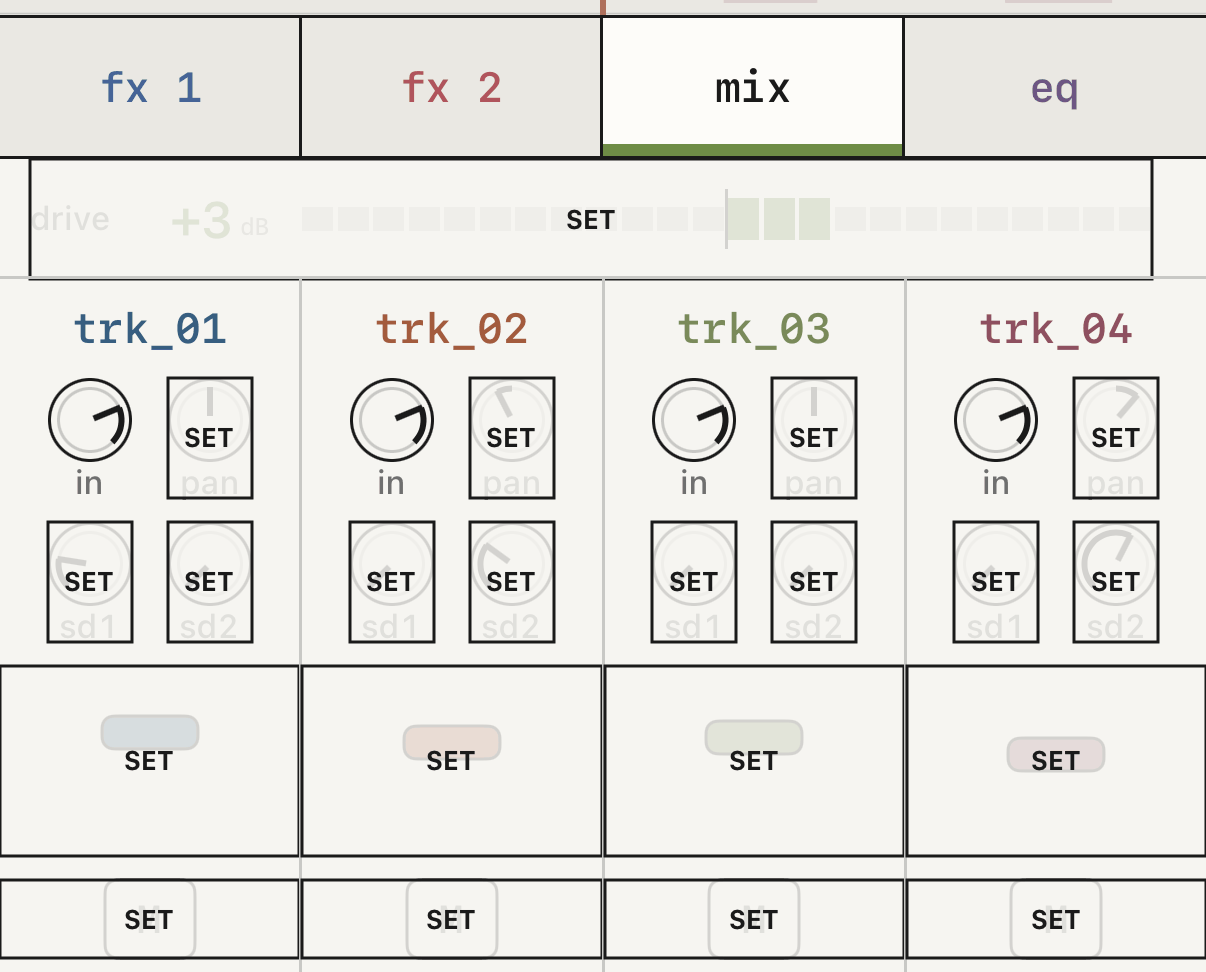
A fader can't lie about where it is. That's the whole point of one. The mixer took four passes to keep it that honest: every strip reads at a glance, and the live colour is reserved for the one thing you can move.

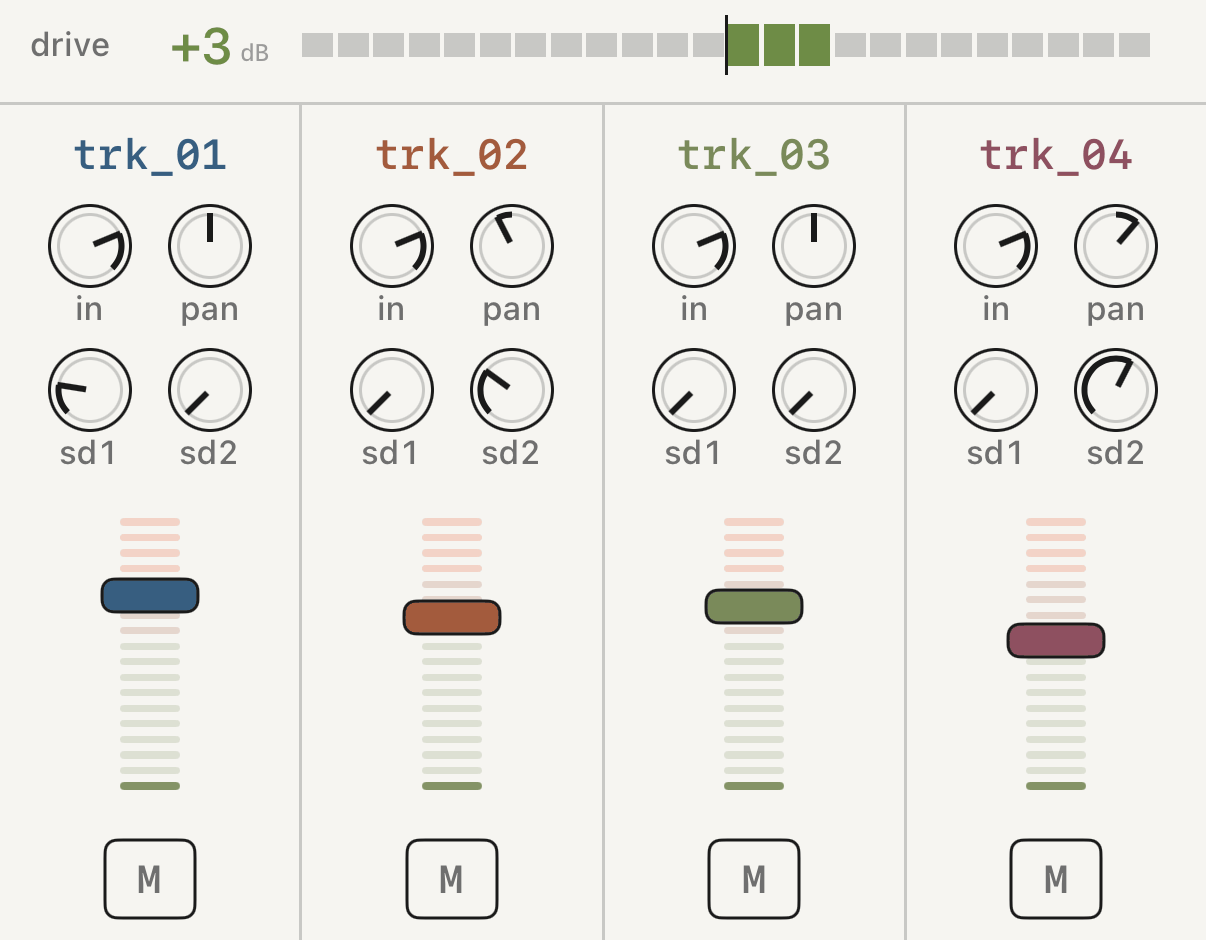
The shipped mixer
  1. A.1

    The strip appears

    Fader plus meter. Right idea, no grammar yet. Everything competing for attention.

  2. A.2

    Into the mix tab

    Gain and pan knobs, two send returns. A channel becomes a channel.

  3. A.3

    Tightened

    Spacing pulled in, meters quieted, mute given a home. The eye stops wandering.

  4. A.4

    Ships

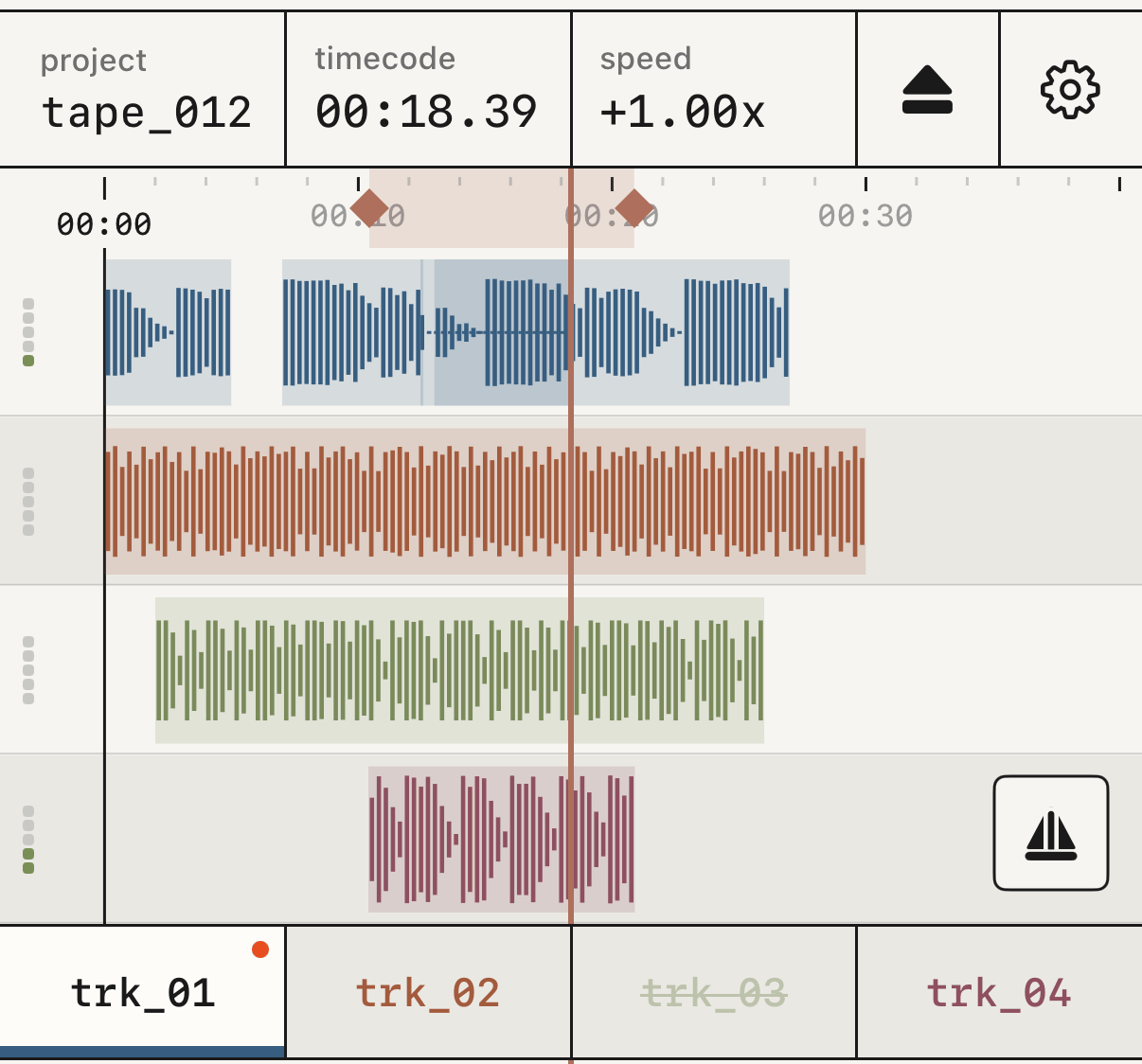
    Teal cap = the movable truth. Track names keep their identity colour; a muted track greys out, struck through.

Fig. 04

The fine print on the tape.

You met the effects upstairs. Here's the physics under them, for whoever scrolled this far.

  1. tape_sat

    Jiles–Atherton magnetic hysteresis. The actual physics of how iron remembers a signal, not a soft-clip curve pretending.

  2. tape_delay

    A delay line carrying the transport's own drag and wow. The pitch wavers because real tape did.

  3. reverb

    An 8-line Jot FDN, a feedback delay network, the grown-up way to build a room.